

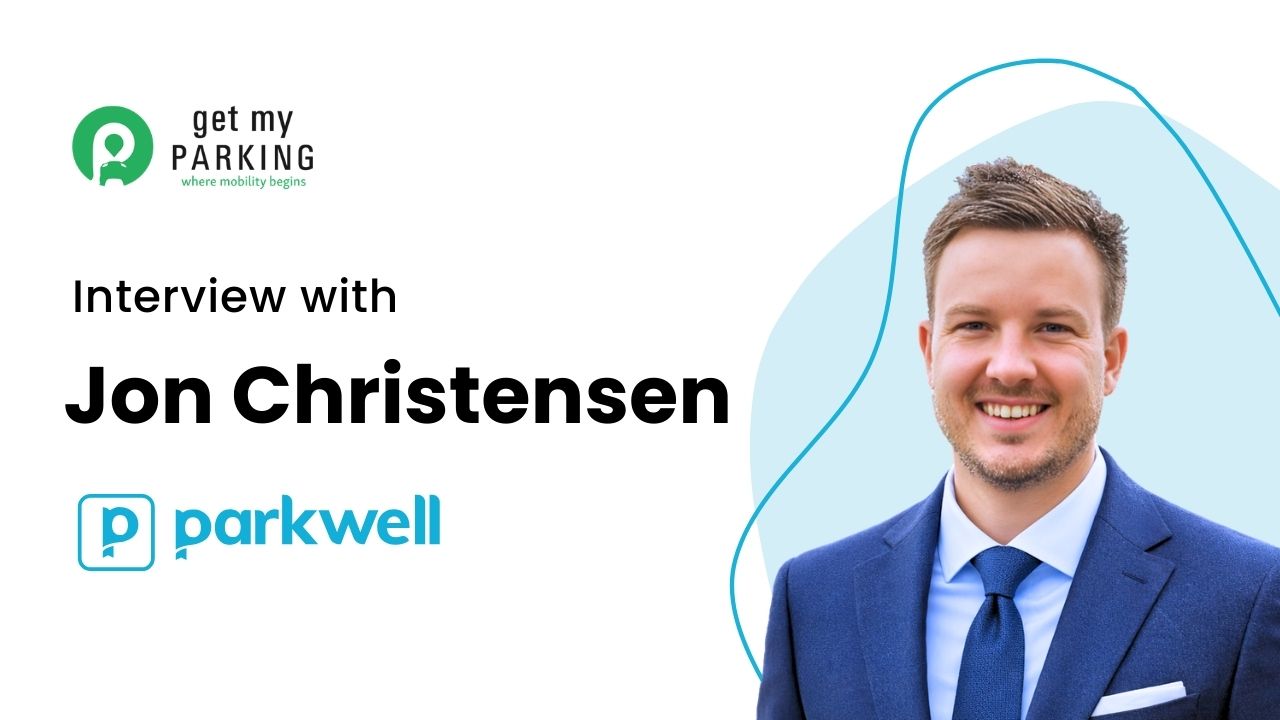
Jon Christensen of Parkwell on Positioning for Impact and Leading Through Change
Parkwell has grown from a small regional operator into a scaled parking management platform focused on operational performance, disciplined expansion, and long-term partnerships. As the industry shifts toward smarter systems and data-driven decision-making, Parkwell has positioned itself at the intersection of operational expertise and modern technology.
Few leaders have had a front row seat to that transformation like Jon Christensen.
When Jon joined Parkwell, there were just three locations.
“I was the first employee,” he says. “In the early days, I supported operations. Hanging signs. Doing whatever needed to be done.”
Today, he serves as Executive Vice President, leading growth and business development. As the company has expanded its footprint and capabilities, his role has evolved alongside it, carrying forward the operational discipline that defined those early days.
Watch the Full Conversation
Watch Jon share his perspectives about leadership, AI adoption, and where the industry is headed in our full video interview below.
Watch the complete conversation to hear his insights firsthand.
Positioning Where It Matters Most
One lesson has stayed with him throughout his career:
“A good general positions himself at the most decisive point in the battle.”
For Jon, leadership is about impact.
“Where can I be to influence the outcome for a client? Where does it matter most?”
That principle guides how he approaches partnerships, growth strategy, and operational decisions. The role may have changed, but the focus remains the same: deliver results where they count.
People Are the Product
Before entering parking, Jon worked in insurance and marketing. Those experiences sharpened his understanding of what drives long-term success.
“People and relationships are everything.”
At Parkwell, that philosophy is foundational.
“We always say our people are our product. The more you invest in your team and your client relationships, the stronger the results.”
In an industry often centered around hardware, gates, and systems, this perspective is a reminder that infrastructure alone does not create value. People do.
What’s Outdated and What’s Accelerating
When asked what feels outdated in parking, Jon points inward first.
“Some internal processes still rely on legacy workflows. We want our team focused on what moves the needle, not checking boxes because it’s always been done that way.”
Efficiency today is not about doing more work. It is about doing the right work.
The area accelerating fastest?
AI.
Where AI Is Making the Biggest Impact
“I’m seeing it most clearly in license plate recognition.”
AI-enhanced vision systems are significantly improving read accuracy and match rates. What once resulted in misreads or unmatched plates can now be corrected through intelligent pattern recognition.
Beyond LPR, AI is driving faster research, stronger analytics, and better informed decision-making.
“It’s making us faster. Tasks that used to take significant time can now be processed much more efficiently.”
That speed matters. But what matters more is precision. AI is helping operators reach the last one percent of operational accuracy that has historically been the hardest to achieve.
Industry Response: Cautious or Optimistic?
“Change is always a mixed bag. But in my experience, it’s mostly excitement.”
Over the last decade, parking has evolved rapidly. Software-driven systems are reducing friction, eliminating unnecessary manual tasks, and creating smoother customer experiences.
“AI-infused systems reduce friction points and streamline operations.”
Operators and partners are increasingly open to modernization. The conversation has shifted from whether to adopt technology to how to adopt it strategically.
The Future of Parking
Looking ahead, Jon sees deeper integration between operators and technology providers. Systems are expanding into locations that have never managed parking. Processes are becoming faster and more intelligent.
“Things are moving more efficiently than ever.”
Yet even as innovation accelerates, he is clear about one constant.
“The focus on people does not go away. The relationships with partners and the teams managing locations remain critical.”
Technology may power the system. People define the experience.
Advice for Future Leaders
Jon’s advice for emerging parking leaders is straightforward.
“Patience and excellence are essential.”
Careers are built over time. Growth shapes leaders just as much as leaders shape growth.
“As you refine your career, it is refining you. Do not rush that process.”
Consistency and commitment to excellence create the foundation for larger responsibilities ahead.
Where Leadership and Technology Converge
From hanging signs at three locations to shaping enterprise growth strategy, Jon Christensen’s journey reflects the broader evolution of parking itself.
Smarter systems. Faster operations. Stronger partnerships.
But as parking becomes increasingly software-driven, the real differentiator is not simply adopting AI. It is integrating the right intelligence into daily operations in ways that reduce friction, improve accuracy, and empower teams.
That is where platforms like Get My Parking are helping define what modern parking looks like. By combining AI-driven vision, automation, and intelligent integrations, GMP enables operators to modernize while maintaining control of the customer experience and performance outcomes.
As the industry continues to evolve, the operators who align strong leadership with the right technology partners will shape what comes next. And that future is already underway.